
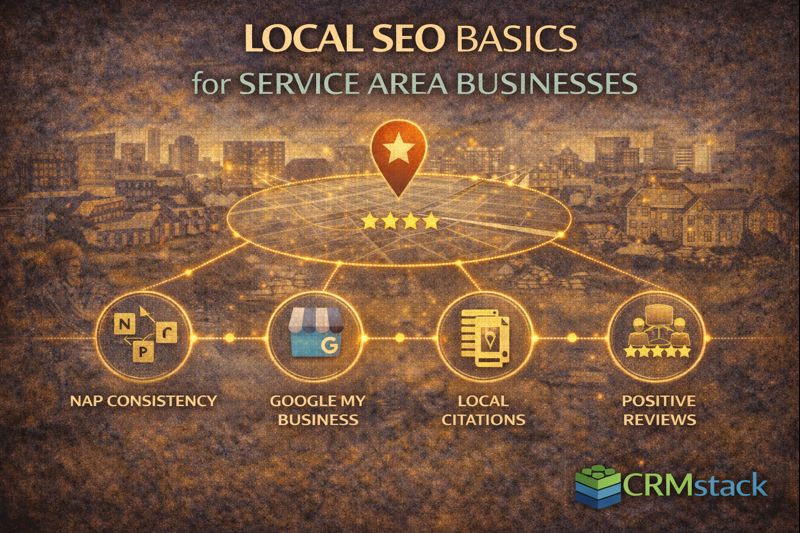
Local SEO Basics for Service Area Businesses
Local SEO Basics for Service Area Businesses
Service-area businesses (SABs) face unique local SEO challenges. You serve customers in their locations, not yours. You might not have a storefront. Your "location" is defined by service areas, not a pin on a map.
Here's how to approach local SEO when you're a mobile or home-based service business.
What Makes SAB SEO Different
Traditional local businesses have a physical location customers visit. Google can verify the address, show it on maps, and rank based on proximity.
Service-area businesses—contractors, mobile services, home-based businesses—don't have that anchor point. You need to rank in multiple areas without a physical presence in each.
The strategies overlap, but SABs need to emphasize:
- Service area definition
- Location-specific content
- Reviews mentioning locations served
- Citations without a public address
Google Business Profile for SABs
Configure your GBP as a service-area business:
- Choose "I deliver goods and services to my customers"
- Define service areas by city, county, or zip
- Hide your physical address (unless customers do visit)
You can list up to 20 service areas. Be realistic—don't claim areas you rarely serve.
Note: SABs sometimes have harder time ranking than storefront businesses, especially in competitive markets. You'll need to compensate with strong reviews, citations, and content.
Location Pages
Create pages on your website for each major area you serve:
yoursite.com/plumbing-services-denver
yoursite.com/plumbing-services-aurora
yoursite.com/plumbing-services-lakewood
Each page should have:
- Unique, helpful content about serving that area
- Local references (neighborhoods, landmarks, local knowledge)
- Service details relevant to that area
- Testimonials from customers in that area if possible
Don't create thin pages with just city name swapped. Google sees through this. Make each page genuinely useful.
NAP Consistency
NAP = Name, Address, Phone. Even without a public address, your NAP must be consistent everywhere:
- Business name spelled exactly the same
- Phone number in same format
- If you do use an address anywhere, it must match everywhere
Check NAP consistency with tools like Moz Local or BrightLocal.
Citations for SABs
Citations are mentions of your business on other websites—directories, review sites, industry listings.
For SABs without public addresses:
- Some directories require addresses—you can often use your hidden address
- Focus on directories that handle SABs well (Yelp, Angi, HomeAdvisor)
- Industry-specific directories may be more valuable than general ones
Quality over quantity. A dozen accurate citations beat a hundred sloppy ones.
Reviews and Location Signals
Reviews help ranking, and reviews that mention locations help even more.
If a customer says "Great plumber in Aurora!" that reinforces your relevance for Aurora searches.
You can't (and shouldn't) dictate what customers write, but you can mention where you served them when requesting the review: "Thanks for letting us help with your Aurora home! Would you mind leaving a quick review?"
Content Strategy for SABs
Create content that demonstrates local expertise:
- "Common Plumbing Issues in Denver Homes" (local knowledge)
- "Guide to [City] Building Permits for Homeowners" (local utility)
- Case studies featuring local projects
- Local events or community involvement
This content signals to Google that you're genuinely relevant to the area, not just claiming to serve it.
Schema Markup
Schema markup helps search engines understand your business. For SABs, use LocalBusiness schema with:
- areaServed property listing your service areas
- serviceType for what you offer
- aggregateRating for your reviews
This is technical but worth implementing—or having your web developer handle.
Building Local Backlinks
Links from local websites boost local rankings:
- Local business associations and chambers of commerce
- Local news mentions
- Community sponsorships and involvement
- Local suppliers and partners
A link from your city's newspaper or business association is worth more than a random directory listing.
Multiple Service Areas Strategy
If you serve a wide area, prioritize:
- Most profitable/frequent areas first
- Highest-population areas (more search volume)
- Areas where you have existing reviews
- Less competitive areas where you can rank easier
You can't rank #1 everywhere immediately. Focus efforts and expand from strength.
Tracking Local Rankings
Monitor your rankings in each service area. Tools like BrightLocal, Whitespark, or LocalFalcon show rankings at different points in your service area.
You'll often rank better close to your base and worse further out. That's normal for SABs.
The Multi-Location Consideration
Some SABs grow by establishing presence in multiple areas—a "virtual" or physical location in new markets. This requires separate GBP listings and is subject to Google's guidelines.
If considering expansion, research Google's policies carefully. Fake locations get suspended and penalized.
The Bottom Line
Local SEO for SABs requires extra effort compared to storefront businesses. You're proving relevance without a physical anchor.
Focus on: clear service area definition, location-specific content, reviews with location mentions, consistent citations, and local links.
Done well, SABs can dominate local search across their entire service area—without paying for a storefront in every city.
Generate more local reviews with automated requests.
Start Your 14-Day Free Trial


